
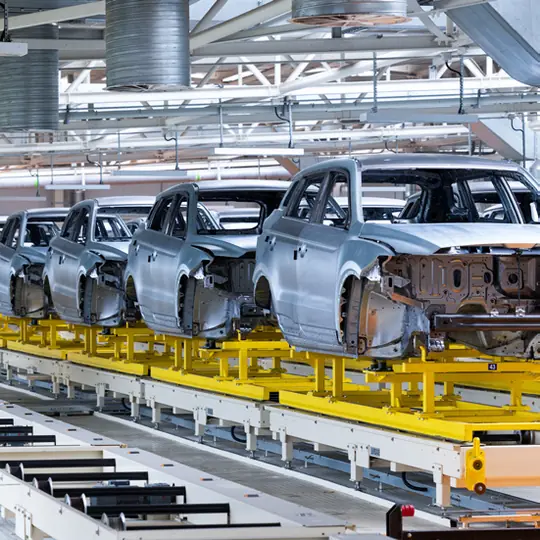
In the automotive industry, every decision made before a part goes into series production is repeated thousands of times over the run. A poorly chosen tolerance or an unnecessary set-up goes unnoticed on a single part but adds up to a noticeable annual cost. Here are the questions we focus on most in our manufacturing consultancy.
Does the tolerance really need to be this tight?
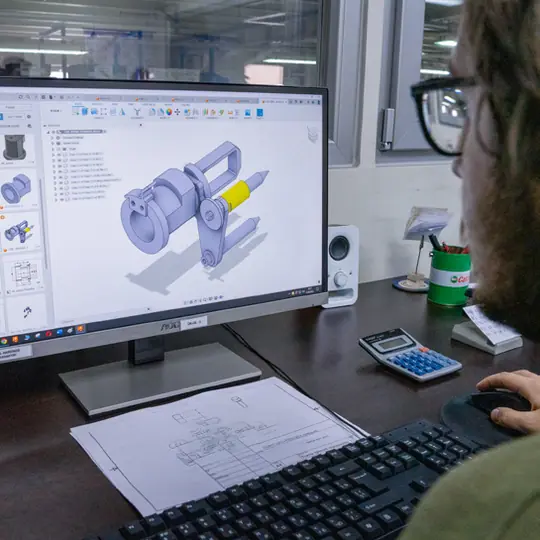
A common issue on drawings is tight tolerances on dimensions that have no function in the assembly. Every tight tolerance means a slower finishing pass, more frequent measurement and a higher scrap rate. Working out together which surfaces of the part actually interface with the mating part, and tightening the tolerance only there, reduces cost without lowering quality.
Will the material be available for the whole series?
A material that is easy to source for a prototype can become a supply problem in a series of thousands of parts a year. When choosing a material, long-term market availability and certificate requirements should be weighed alongside strength and machinability. If heat treatment or coating is needed, their effect on dimensions must be allowed for in the drawing.
How many set-ups will the part need?
Every additional set-up costs time and introduces positional error. On parts that are machined on several faces, 5-axis machining reduces the number of set-ups and so maintains the positional tolerances between surfaces. In series production, a well-designed fixture allows several parts to be clamped at once, which shortens the cycle time.
What do we measure, and how often?
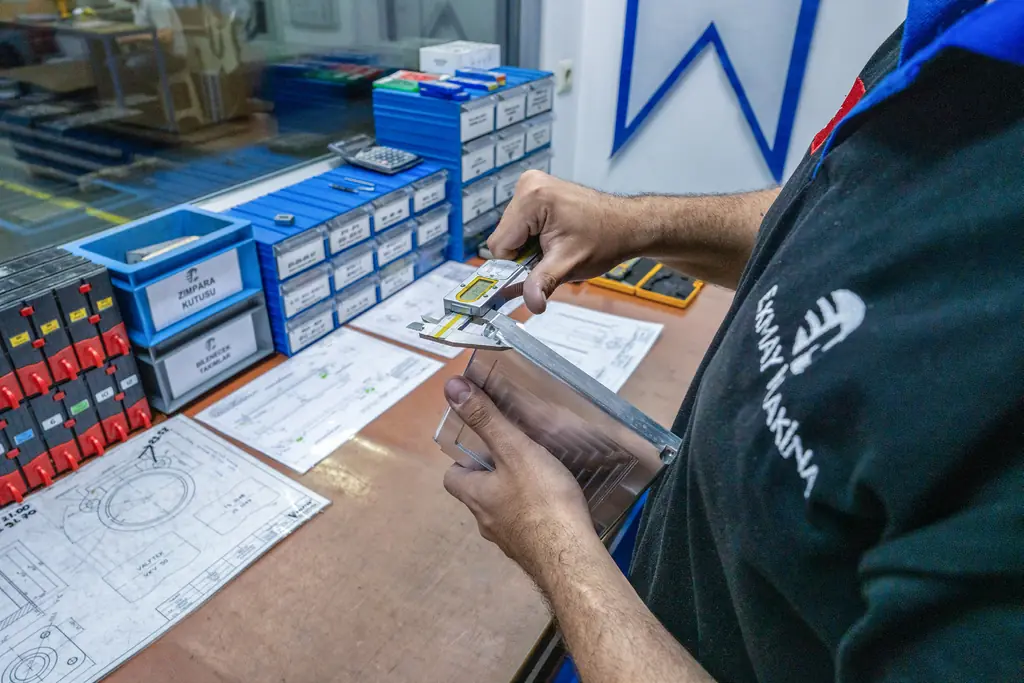
Critical dimensions and inspection frequency should be defined before series production starts. If the measuring equipment for first article approval, in-process inspection and final inspection is planned from the outset, there are no surprises during the run. For positional tolerances and complex geometries, measurement on a coordinate measuring machine (CMM) is part of this plan.
Long-term spare parts supply
Vehicle models stay in use for years, and demand for spare parts continues after series production has ended. Archiving the drawing, the CNC program and the set-up data means that a small-batch order arriving years later can be produced quickly and to the same quality.
Answering these questions at the design stage is always cheaper than making corrections in series production. We can review your part together as part of our manufacturing consultancy and then move on to automotive spare parts production with the same team.